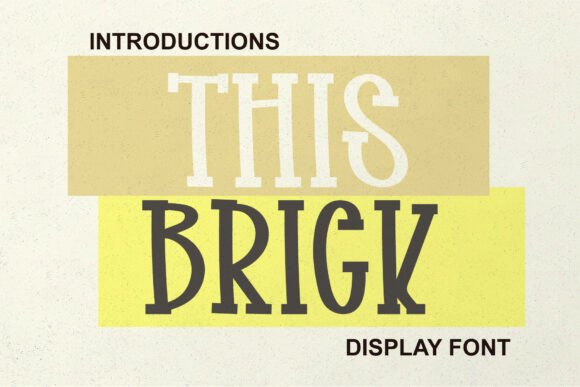
This Brick: A Handwritten Font for Elegant Design
When it comes to selecting a font that balances creativity with functionality, This Brick stands out as a unique option. This handwritten font is characterized by its delicate, elegant, and flowing style, making it ideal for projects that require a personal touch. Its design evokes a sense of timeless charm, which can elevate the visual appeal of any composition.
Designed for those who appreciate the artistry of typography, This Brick offers a distinct aesthetic that sets it apart from more conventional typefaces. Its swashes and glyphs are carefully crafted to add a sense of movement and fluidity, which can be particularly effective in branding, invitations, or editorial layouts. The font’s PUA encoding ensures that users have access to all its glyphs without the need for complex character mapping, making it user-friendly for designers who want to explore its full potential.
Why Someone Might Be Interested in This Brick
This Brick appeals to a variety of users, including graphic designers, typographers, and creative professionals looking for a font that adds a personal and artistic flair to their work. Its handwritten nature makes it a popular choice for projects that aim to convey warmth, authenticity, or a handcrafted feel. For instance, wedding invitations, greeting cards, and logos often benefit from the subtle imperfections and organic flow of this font.
The font’s elegance also makes it suitable for minimalist designs where simplicity and clarity are key. Its ability to blend seamlessly into different visual styles means it can be used across multiple mediums, from print to digital platforms. Additionally, the font’s versatility allows it to pair well with other typefaces, offering flexibility in layout design.
Benefits and Considerations
One of the primary benefits of This Brick is its ability to add a unique personality to a design. Unlike many standard fonts, it brings a sense of individuality that can make a project stand out. Its flowing lines and soft curves contribute to a visually appealing composition that feels both modern and classic.
Another advantage is its ease of use. Since it is PUA encoded, users can access all of its glyphs directly, without relying on additional software or tools. This simplifies the process of incorporating the font into a design workflow, especially for those who may not be familiar with advanced typographic features.
However, there are some considerations to keep in mind. This Brick may not be the best choice for large blocks of text, as its intricate details can reduce readability in dense paragraphs. It is generally more suited for headings, titles, or short phrases where its visual impact can shine.
Additionally, while the font’s style is distinctive, it may not align with all design aesthetics. For example, a highly technical or corporate environment might find the font too informal or unconventional. In such cases, a more structured or sans-serif typeface could be a better fit.
Situations Where This Brick Excels
This Brick is particularly well-suited for projects that emphasize creativity, emotion, or storytelling. Branding efforts that aim to convey a sense of craftsmanship or artisanal quality can benefit from its elegant style. It is also an excellent choice for personal or small business projects, where a custom look can help differentiate the brand from competitors.
In editorial design, This Brick can be used to highlight key sections of a publication, such as headlines or captions. Its flowing nature can guide the reader’s eye and add visual interest to otherwise static layouts. When paired with a clean, modern typeface, it can create a balanced and dynamic composition.
For digital applications, the font works well in web design, social media graphics, and mobile interfaces. Its legibility at smaller sizes makes it a practical option for buttons, labels, or other interactive elements that require a stylish yet functional appearance.
When Alternatives Might Be Better
While This Brick has many strengths, there are scenarios where alternative fonts may be more appropriate. For instance, if a project requires high readability in long-form content, a more traditional serif or sans-serif font might be a better choice. These fonts are typically optimized for body text and can maintain clarity even at smaller sizes.
Users working in highly formal or professional environments may also find that This Brick feels too casual. In such cases, a more restrained or structured typeface could better align with the overall tone of the design. Similarly, if the goal is to create a strong visual contrast, a bold or geometric font might offer greater impact than This Brick’s softer style.
It’s also important to consider the target audience when choosing a font. If the intended viewers are more accustomed to clean, minimal designs, This Brick’s intricate details might be distracting rather than enhancing the message.
Decision-Making Insights
When evaluating whether This Brick is the right choice, it’s helpful to consider the specific goals of the project. Ask questions such as: What message does the design need to convey? Who is the target audience? What visual style is most appropriate?
Testing the font in different contexts can also provide valuable insights. Experimenting with how it looks in various sizes, colors, and backgrounds can help determine its effectiveness in the intended application. Additionally, comparing it with other fonts can reveal how it stacks up in terms of style, readability, and usability.
Ultimately, the decision to use This Brick should be based on how well it aligns with the creative vision and practical requirements of the project. By weighing its strengths and limitations, designers can make informed choices that enhance the overall impact of their work.