Disco: A Bold Display Font for Retro Nightlife and High-Energy Design
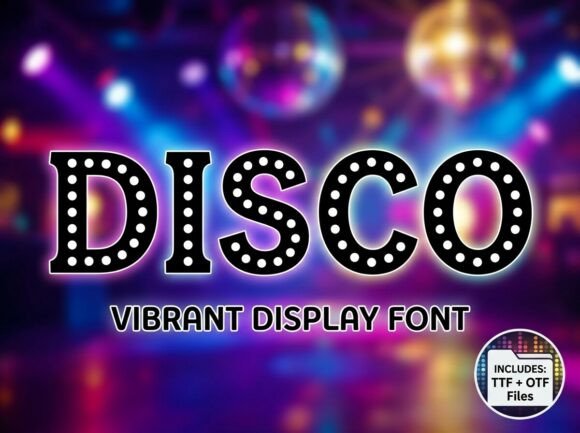
Disco is a premium display font that brings the vibrant energy of 1970s nightlife into modern design. Inspired by vintage marquee cinema signage and classic dance club lighting, this slab-serif typeface combines thick structural stems with a dual line of high-contrast marquee bulb dots. The result is a dynamic, pulsing visual effect that adds movement and flair to any text block.
Designed for use in retro party invitations, music concert posters, vintage nightclub logos, theatrical banners, and high-energy merchandise headings, Disco stands out as a versatile and eye-catching option. Its unique combination of boldness and playfulness makes it ideal for projects that require a strong visual impact and a nostalgic aesthetic.
What Makes Disco Distinct?
Disco’s most notable feature is its internal dot system, which mimics the look of traditional neon signs. These dots are aligned in a way that creates an immediate sense of motion, making the text appear to pulse or flash. This effect is especially effective when used in large-scale designs where movement can enhance the overall visual appeal.
The font’s slab-serif structure gives it a strong, grounded presence, while the high-contrast dots add a layer of detail and sophistication. This balance between simplicity and complexity allows Disco to maintain legibility even at smaller sizes, making it suitable for both headlines and subheadings.
Unlike many other display fonts that rely on minimalism or abstract shapes, Disco embraces the ornate details of its inspiration. This approach makes it particularly well-suited for projects that aim to evoke a specific era or atmosphere, such as themed events, retro branding, or artistic installations.
How Disco Compares to Similar Fonts
When compared to other display fonts, Disco occupies a unique niche. Many similar options focus on geometric precision or modern minimalism, whereas Disco leans into the nostalgic and decorative aspects of vintage design. This distinction can be both an advantage and a limitation, depending on the project’s requirements.
Fonts like Bebas Neue or Montserrat offer clean, versatile styles that work well across a wide range of applications. They are often preferred for their neutrality and adaptability. In contrast, Disco’s distinct character may not fit every design context. It is best suited for projects that intentionally seek a retro or theatrical vibe rather than a more neutral or contemporary look.
Another key difference lies in the level of detail. While some display fonts prioritize clarity and readability, Disco emphasizes visual storytelling through its design elements. This means that while it may not be the best choice for body text, it excels as a headline or focal point in a layout.
Strengths and Tradeoffs of Using Disco
One of Disco’s main strengths is its ability to create a strong visual identity. Its boldness and motion effect make it ideal for grabbing attention and setting the tone for a design. This makes it a popular choice for event promotions, entertainment branding, and creative campaigns that aim to stand out.
However, this same boldness can also be a drawback. In some cases, Disco may overpower other design elements, making it difficult to balance the overall composition. Additionally, its intricate details may not translate well to all mediums, particularly digital formats where rendering quality can vary.
Another consideration is the font’s suitability for different industries. While it works exceptionally well for entertainment, fashion, and lifestyle branding, it may not align with the more professional or minimalist aesthetics required in corporate or academic contexts.
Best-Fit Situations for Disco
Disco is most effective in situations where a retro or high-energy aesthetic is desired. For example, it could be used in a music festival poster to evoke the excitement of a live performance, or in a nightclub logo to capture the essence of a 1970s dance club. Its visual impact makes it a strong choice for promotional materials that need to convey energy and style.
It is also well-suited for theatrical productions, where the font’s dramatic appearance can complement stage designs and marketing materials. In these contexts, Disco helps reinforce the theme and mood of the event, creating a cohesive visual language that resonates with the audience.
For designers looking to add a touch of nostalgia or whimsy to their work, Disco offers a compelling option. Its unique design elements allow it to stand out in a crowded market, making it a valuable tool for those who want to create memorable and distinctive visuals.
When to Consider Alternatives to Disco
While Disco is a powerful font, there are scenarios where other options may be more appropriate. For instance, if the goal is to create a clean, modern design, a simpler display font might be a better fit. Fonts like Raleway or Open Sans provide a sleek, professional look that works well in a variety of settings.
In cases where legibility is a priority, especially for longer text blocks, a more straightforward typeface may be preferable. Disco’s detailed design, while visually appealing, may not be the best choice for body text or extended reading passages.
Additionally, for projects that require a more subtle or sophisticated appearance, fonts with a more restrained design may be more suitable. These alternatives can provide the same level of professionalism without the added visual complexity of Disco.
Practical Examples of Disco in Use
Consider a scenario where a local theater is promoting a revival of a classic musical. Using Disco as the headline font would immediately communicate the show’s retro theme and energetic atmosphere. The font’s motion effect could be enhanced with animation in digital formats, further drawing attention to the event.
Another example is a boutique clothing brand launching a new line inspired by 1970s fashion. Incorporating Disco into the logo and marketing materials would help establish a strong visual identity that aligns with the brand’s aesthetic. The font’s boldness and playful nature would resonate with the target audience, reinforcing the brand’s connection to the era.
For a music festival, Disco could be used in the main poster to create a sense of excitement and anticipation. Paired with vibrant colors and dynamic layouts, the font would contribute to an overall design that reflects the energy and diversity of the event.
Conclusion: Is Disco the Right Choice for You?
Disco is a powerful and distinctive display font that brings the energy of retro nightlife into modern design. Its bold structure, motion effect, and nostalgic inspiration make it an excellent choice for projects that require a strong visual identity and a sense of movement.
However, its effectiveness depends on the specific needs of the project. If the goal is to create a retro or high-energy aesthetic, Disco can be a valuable asset. For more neutral or minimalist designs, alternative fonts may be more appropriate.
Ultimately, the decision to use Disco should be based on the intended message, audience, and overall design strategy. By understanding its strengths and limitations, designers can make informed choices that best serve their creative goals.